
Uncategorized

WHEN THE RAIN COMES

If you were anywhere between the Bronx and Saratoga Tuesday night and Wednesday morning, you’re still drying out.

Parts of a band that runs along Interstate 87 in New York got as much as 9-1/2 inches of rain in the overnight period. Massive flooding. Buildings washed away. 

Get used to it.

Climate change is no longer in the warning stage. It’s here, and the deluge New Yorkers felt and heard is just one more indication that we might passed the point that this is fixable.

And if you’re of a certain age – say, mine – you know that this is very real. I’ve been saying for years that I’ve noticed storms are getting more dynamic as time passes. The lightning is brighter. The thunder is louder. The rain falls in sheets. The wind blows harder.

But, of course, we live in a country run by deniers. Starting with the orange gasbag at the top. What happened in upstate New York isn’t even on his radar. He could care less.

He’s too busy losing a war for oil, whose persistent use triggered this climate crisis. He sent American forces, the pride of our nation, to battle over a commodity that we should be finding ways to avoid using.

It’s killing us and he’s killing them.

I’m not knowledgeable in climatology. Frankly, I don’t know a whole lot about science in general.

But I do know that the evidence points to a problem. A big one. Despite what Trump, his tame cabinet and the sycophant Republican politicians say.

If I’m a Democrat candidate, I’m saving the videos of ravaging weather for my campaign ads. I suspect every congressional and state legislature candidate has at least one instance of recent ridiculous weather in her or his district.

And then say that while it’s an uphill battle, we can still do things to fight.

We can commit to more electric vehicles on the road. We can commit to bolstering mass transit and getting creative with the options to get people from place to place.

We can commit to boost alternative energy sources – solar and wind. 

We can commit to improving infrastructure – in particular, we can figure out what it takes to stop roads from flooding in extreme wet weather. It’s hard to stop it when there’s 10 inches of rain in 24 hours, but two inches in a day shouldn’t instantly mean you can get from here to there.

The weather is going to become more extreme, at least for the rest of my lifetime. Big rain. Big heat. Big cold – climate change also means clippers from the Arctic have an easier path to sweep into the middle of the United States. Which also means big snow.

It feels like banging your head against a wall when you hear dopes chant “Drill, baby, drill” or “Trump digs coal.” But it beats the alternative – just watching the climate get worse and giving up.

Our children and grandchildren will never forgive us for letting this happen. They shouldn’t. When it comes to climate change, we’re all wet.
favorites://
Standard
Uncategorized

ALOHA (THE GOODBYE EDITION)

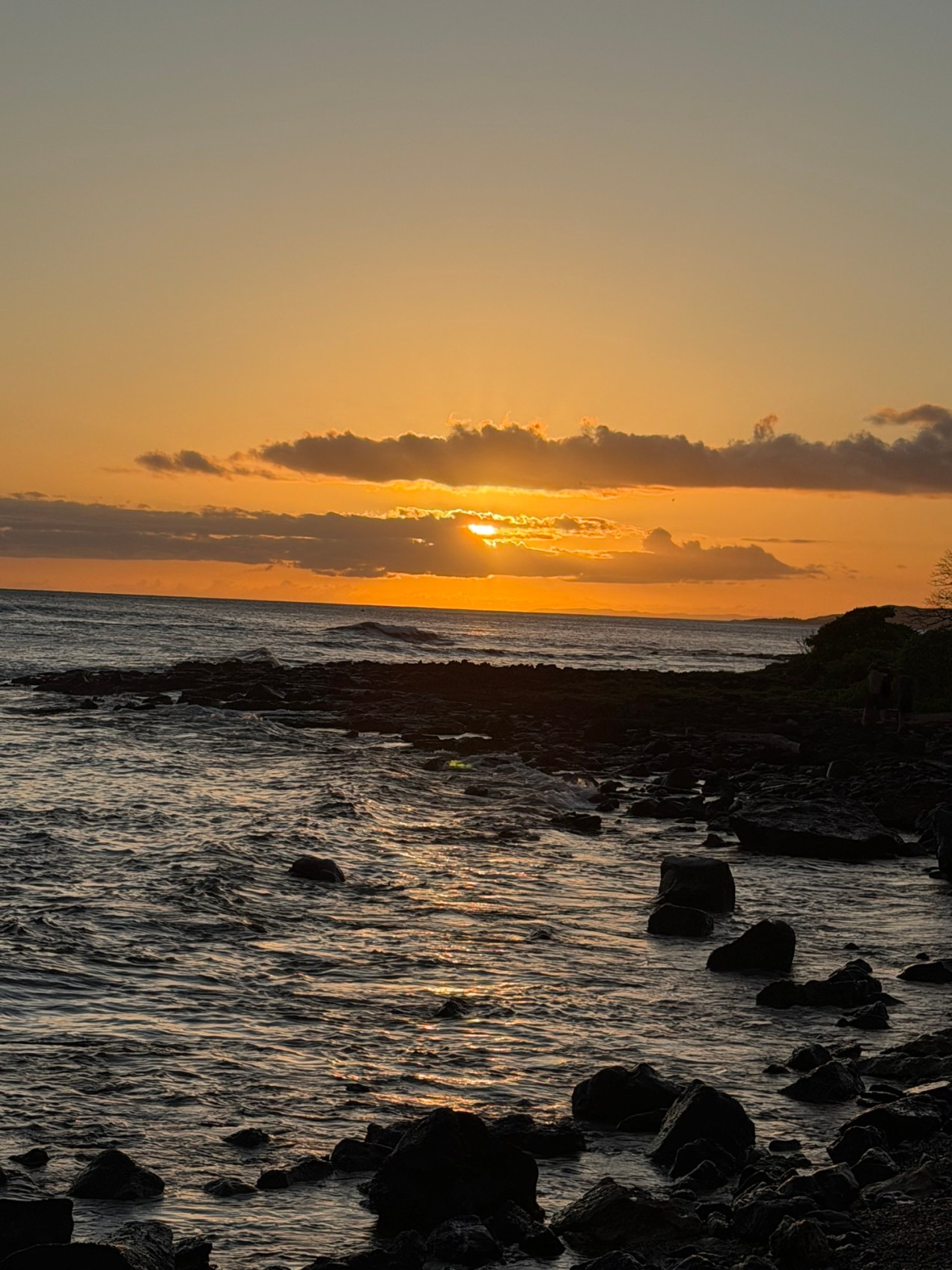
POIPU, HAWAII – By the time you read this, I will have left Kauai, where I’ve spent the past two weeks.

It’s been mostly terrific. Because I love Hawaii. Especially this island, Kauai.

We’ve been very lucky – almost lottery-quality lucky. The three other main islands – Oahu, Maui and Hawaii – were inundated by rain in what’s called Kona Storms. Parts of the other islands remain underwater. People needed to be evacuated from homes, roads flooded. Miraculously, and thankfully, there is no official death toll attributed to the storms.

Here on Kauai, we got a lot of rain right after we arrived two weeks ago – 6.5 inches at the airport where we landed. We spent the first two days of our vacation cooped in our room.

But it stopped raining early last week and, for the final days of our trip, we got what we came for – sunshine, warmth, a chance to wander around the Garden Island.

Hawaii and Kauai, when they are like they’ve been this week, are glorious.

Yes, there’s the weather and the Pacific Ocean.  The lush greenery. The best seafood anywhere. The magnificent sunrises and sunsets.

Hawaii, though, is glorious for what it represents; the incredible diversity of the United States of America.

It is the crossing point for so much of the human race. Starting with the Polynesians, who settled on the uninhabited islands in the first millennium and lived perfectly well until the late 18th century. 

That’s when the British came. They didn’t expect to find the islands, but once they did, they liked what they saw. They enjoyed the food, the pearls and the young women. They gave back guns and diseases. 

The Russians came here, too. So did the Japanese and Chinese. 

And, of course, the Americans. 

I’ve spent much of early 2026 reading history about Americans and their attitudes toward indigenous people, both in North America and beyond. They weren’t much into sharing, or abiding by agreements. I think that’s what Trump sees as America’s greatness, aka double dealing. The islands ended up belonging to us.

In 1960, Hawaii became the 50th state. We haven’t added any since. 

When you come to Hawaii, you notice two things about people. One is that the folks who stay in hotels and resorts tend to be overwhelmingly Caucasian. Certainly more so than home in New York.

The other thing is that the people who actually live and work here are overwhelmingly not Caucasian. They’re an incredible mix of native Hawaiian, Asian, Hispanic and everyone else you can imagine. 

With all that difference, you might expect conflict. Nah!

I have not seen hot tempers or a lot of rudeness. I’m sure the folks who live here could tell me stories. But, for the most part, everyone says “Aloha” to each other and smiles. It seems as genuine as a casual encounter can be.

Amid that placidity is what’s around us – a turbulent ocean. The waves make a lot of noise. They spray and splash and crash and thunder on the lava rocks and the sandy beaches. It’s choppy and looks especially daunting to those of us who live near more tranquil waters.

It’s a lot like the world we live in.

There’s a lot of churn out there. There’s a lot that can get in the way of our happiness. Rogue waves after a tsunami. The flooding you can expect from 24 inches of rain in three days. A brutal sun that burns skin a little faster than in northern climates.

And yet, working together, we solve it.

We get on surfboards (actually, they get on surfboards, I’m not going near one). Then we ride the waves, crash out eventually, and go back out and do it again and again.

The magnificent music created by the slack key guitar and ukelele ease the mind and reach deep into the soul. You could float a tanker with all the sunscreen for sale.

People wear loud shirts and dresses, forget what socks are, read and walk and dream. 

Hawaii is what America should be. It’s impressive that it actually is part of America, because except for the flags and the occasional post office, it often seems like another world.

That’s not to everyone’s liking. There are bumper stickers and graffiti saying “Hawaii is not America.” And the Americanization that has taken place is scary enough to some people that a song on Bad Bunny’s Grammy-winning album warns Puerto Ricans against suffering the same fate.

So let’s work it out. Let’s find a way to make sure Hawaiians and every other American can be their true self and enjoy the pursuit of happiness promised in the Declaration of Independence nearly 250 years ago.

Let’s welcome those who aspire to be us, who want to contribute to a great national effort toward the more perfect union sought by the Constitution. No one – no one! – is “an illegal.”

Let’s solve our real problems amid the stormy seas around us – climate change, equality, economic justice. Let’s explore and question and tolerate and enjoy.

That’s what I see on the beach here on Kauai. I know when you read this I’ll be back among the maelstrom we’ve been experiencing all year – hell, ever since Trump went down the escalator.

But, for now, I’m going to enjoy it – and wish fervently that you and your loved ones get to enjoy it again as well.

Standard